

Note: PRECEDE is only compatible on desktop. Have feedback? Interested in collaborating?

Public Repository to Engage Community and Enhance Design Equity

Disability Inclusion

Learn about the people most impacted:

Disability is not a niche. It is a global reality. People with disabilities constitute one of the world’s largest minority groups, and it is the only group that any of us can become a member of at any time.

‘Defining’ Disability

Disability is the umbrella term for impairments, activity limitations, and participation restrictions, referring to the negative aspects of the interaction between an individual and that individual’s contextual factors (both environmental and personal).

Source:

World Health Organization

People who believe this definition see disability as an inherent problem, or defect, within an individual. A persons defects can be cured, fixed, or eliminated by medical professionals. A person with a disability must find their own modifications to be included within society.

Source:

Medical and Social Models of Disability, Office of Developmental Primary Care, UCSF, 2018

People who follow this definition see disability as an evolving concept that results from the interaction between persons with impairments and attitudinal and environmental barriers that hinder their full and effective participation in society on an equal basis with others. Defining disability as an interaction means that “disability” is not an attribute of the person.

Source:

United Nations Convention on the Rights of Persons with Disabilities

The concept of “people with disabilities” emerged in the 19th century. A blind person, an amputee, and a traumatized veteran do not necessarily have anything in common with one another. But such people, with an array of impairments, began to coalesce into an identity as governments and industries evaluated such people’s capacities or incapacities to work. People who believe this definition evaluate people with disabilities in relationship to their ability to work.

Source:

Gissen, D. (2022). The architecture of disability: Buildings, cities, and landscapes beyond access. University of Minnesota Press.

Disability is the umbrella term for impairments, activity limitations, and participation restrictions, referring to the negative aspects of the interaction between an individual and that individual’s contextual factors (both environmental and personal).

Source:

World Health Organization

People who believe this definition see disability as an inherent problem, or defect, within an individual. A persons defects can be cured, fixed, or eliminated by medical professionals. A person with a disability must find their own modifications to be included within society.

Source:

Medical and Social Models of Disability, Office of Developmental Primary Care, UCSF, 2018

People who follow this definition see disability as an evolving concept that results from the interaction between persons with impairments and attitudinal and environmental barriers that hinder their full and effective participation in society on an equal basis with others. Defining disability as an interaction means that “disability” is not an attribute of the person.

Source:

United Nations Convention on the Rights of Persons with Disabilities

The concept of “people with disabilities” emerged in the 19th century. A blind person, an amputee, and a traumatized veteran do not necessarily have anything in common with one another. But such people, with an array of impairments, began to coalesce into an identity as governments and industries evaluated such people’s capacities or incapacities to work. People who believe this definition evaluate people with disabilities in relationship to their ability to work.

Source:

Gissen, D. (2022). The architecture of disability: Buildings, cities, and landscapes beyond access. University of Minnesota Press.

How We Got Here: The History of Disability Inclusion

Disability inclusion began gaining momentum in the 1960s through civil rights advocacy and key legislation like the ADA. What started as a push for basic access has evolved into a broader movement for universal design, creating spaces that work for everyone. Explore the interactive timeline to see how this progress unfolded.

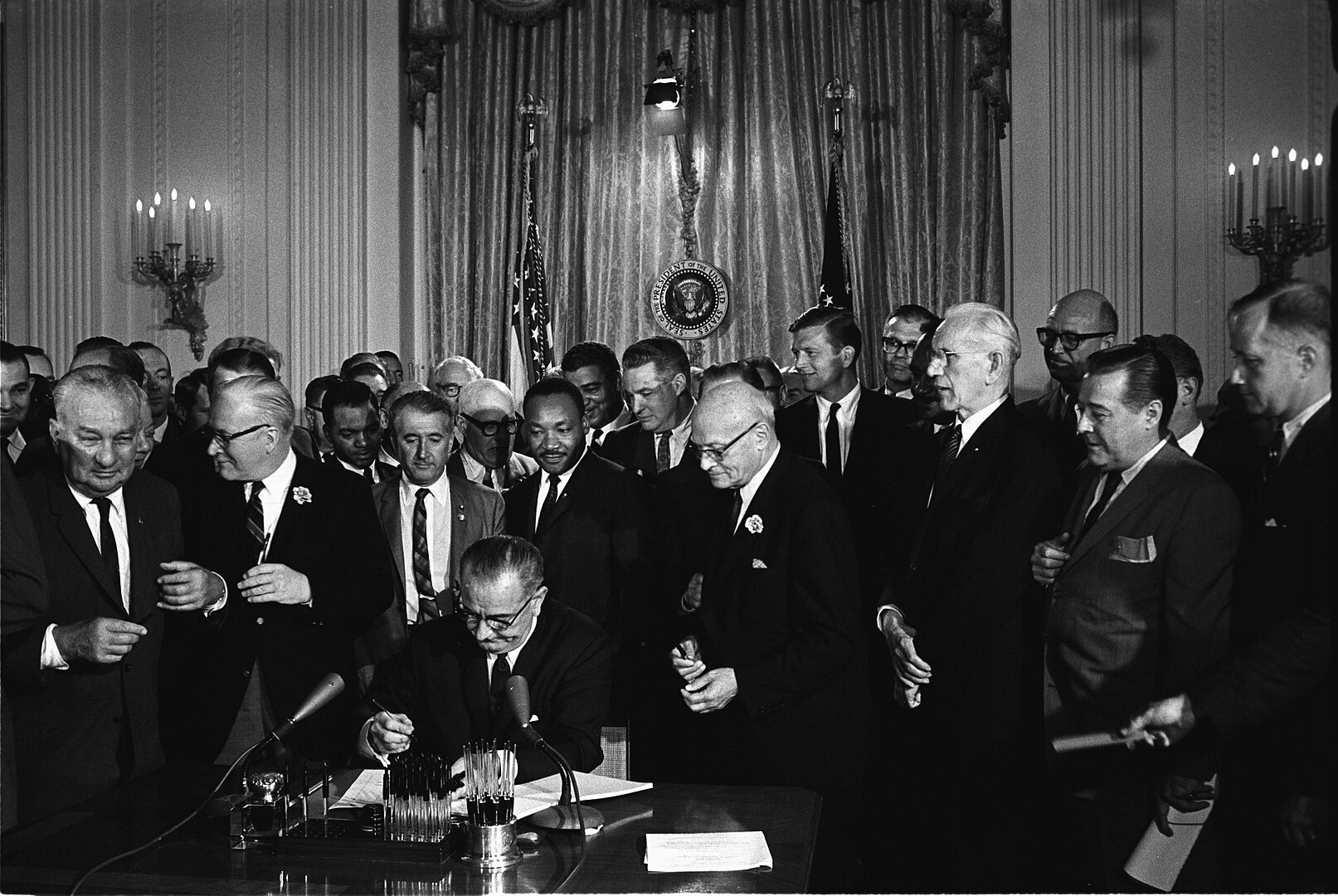
United States President signs bill into action

1960s

1961

ANSI A117.1 Accessible and Usable Buildings and Facilities is published as the first approved criteria for accessibility in the USA.

1964

Civil Rights Act of 1964 passes in the USA, protecting citizens from being discriminated from a space based on race, color, religion, sex, or national origin. This version does not address discrimination based on disability.

1968

USA Congress passes Architectural Barriers Act (ABA), the first measure to ensure access to the built environment for people with disabilities. The law requires facilities that are designed, built, or altered with federal dollars or leased by federal agencies be accessible.

That same year, Bill Baldini’s five-part expose “Suffer the Little Children” airs. It reveals the overcrowded and abusive environment at Pennhurst State School, drawing attention to institutionalization of children and adults with disabilities.
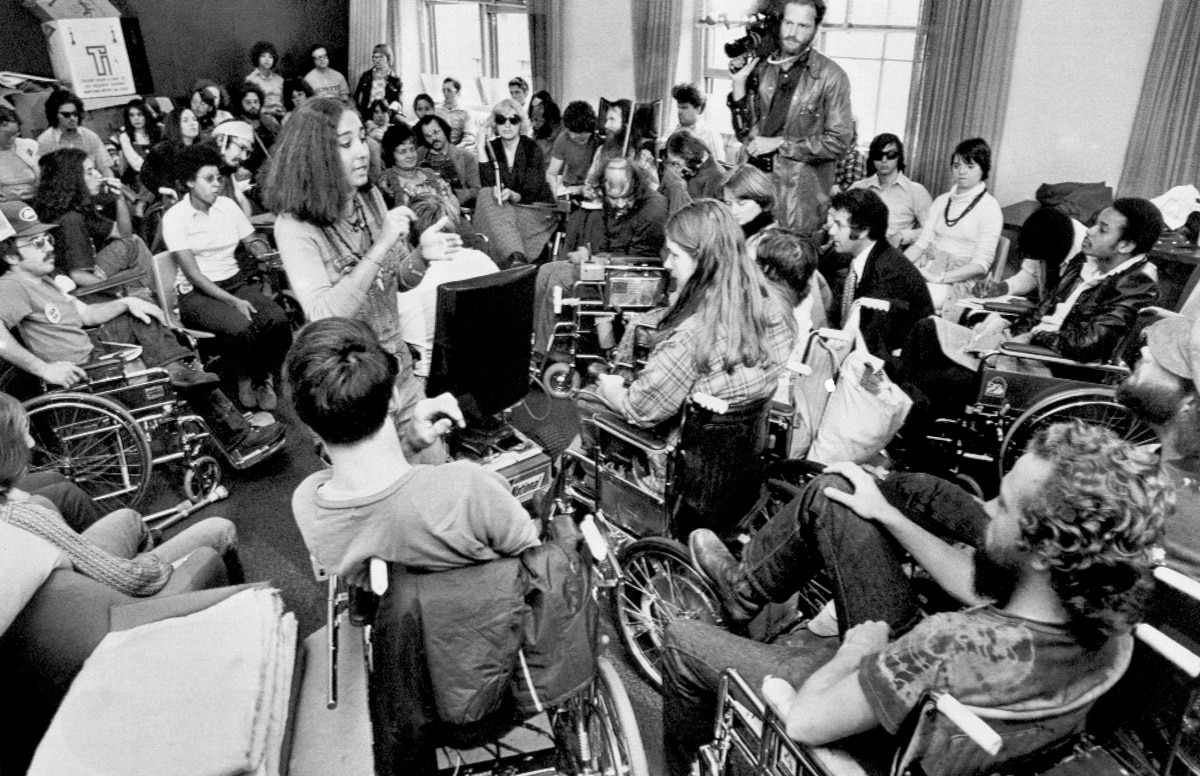
People with disabilities occupy federal building

1970s

 1972

The civil rights movement spurs a widespread adoption of curb cuts. Activists at UC Berkeley smash sidewalk curbs with sledgehammers, then report “deteriorated sidewalks” to the city.

 1973

The Rehabilitation Act of 1973 passes in the USA. It expressly prohibits discrimination based on disability in any federally-funded program or activity.

 1976

The Canadian Coalition of Provincial Organizations of the Handicapped is founded. It will later be renamed the Council of Canadians with Disabilities in 1994.

 1977

The Section 504 sit-in protests the government’s failure to implement Section 504 of the Rehabilitation Act of 1973. It lasts a month, making it the longest protest in a federal building in USA history.
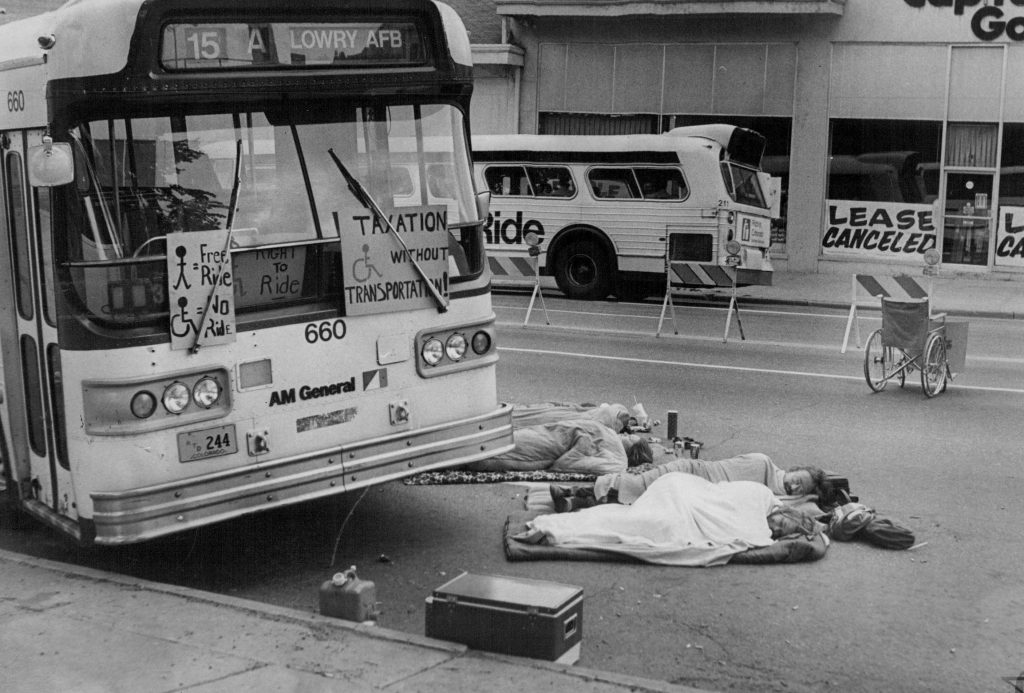
Protestors sleeping in front of public transportation

1980s

1983

In Colorado, USA, the Gang of Nineteen protests over the inaccessibility of public transportation. Chanting “We Will Ride,” protesters roll their wheelchairs into the road to stop traffic. The Americans with Disabilities for Accessible Public Transportation (ADAPT) organization is founded as a result.

1984

Uniform Federal Accessibility Standards are created, to cohesively implement the ABA from 1968 with scoping and technical requirements. This resolves the previous issue of multiple agency involvement.

1988

Fair Housing Amendments Act passes to include housing protections for persons with disabilities.

1989

North Carolina State University establishes the Center for Universal Design under a research grant from the National Institute on Disability and Rehabilitation Research.
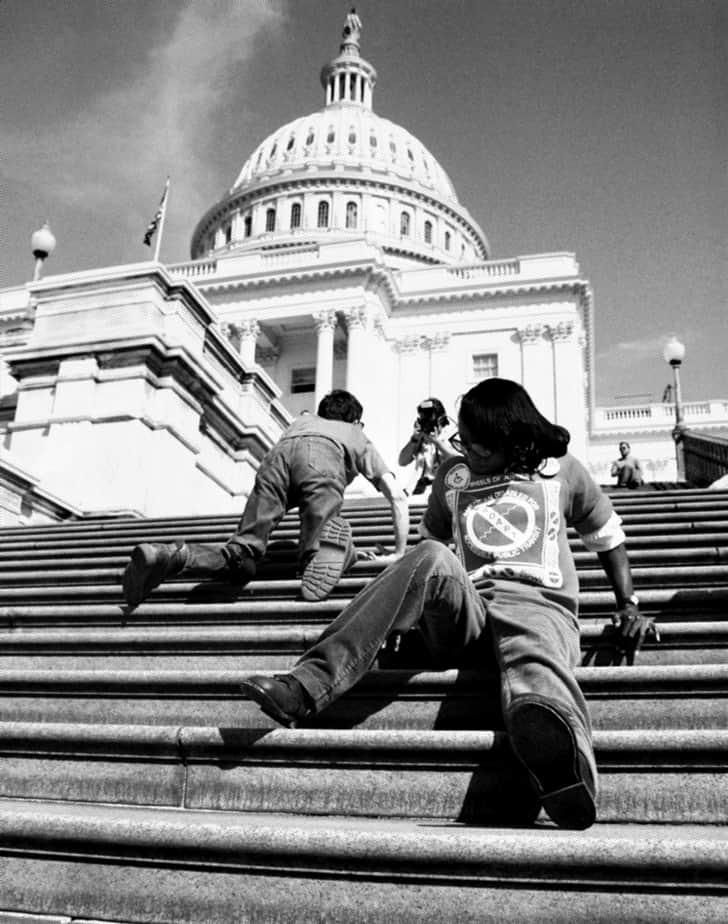
Demonstrators crawl steps to capitol building

1990s

1990

In March, over 1,000 protesters march from the White House to the Capitol Building in Washington DC, USA. Known as the “Capitol Crawl,” 60 demonstrators left their mobility aids and crawled the steps in a planned stunt. In July, the Americans with Disabilities Act (ADA) is signed into law. It prohibits discrimination of people with disabilities.

1991

The Fair Housing Accessibility Guidelines (promote accessible dwellings) and ADA Accessibility Guidelines (understand design accessibility requirements) are published.

1994

After gradual deinstitutionalization, there are only 70,000 people with disabilities in institutions, compared to 560,000 in 1955.

1998

A new version of A117.1 Accessible and Usable Buildings and Facilities debuts. It is intended to be adopted by, and be compatible with International Building Code (IBC).
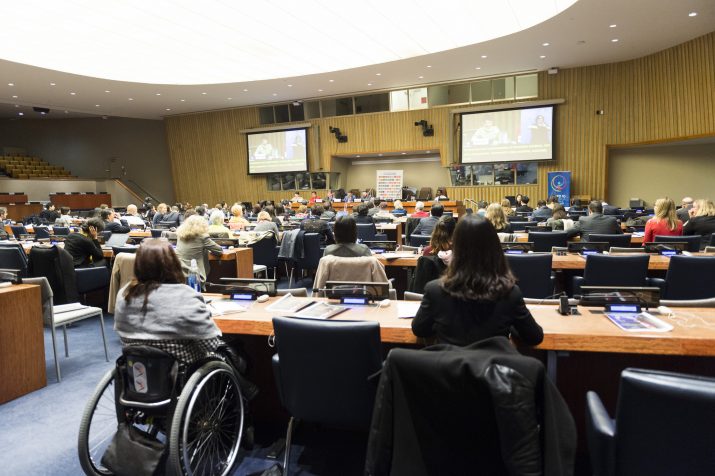
Council members sit in chamber

2000s

2002

The United Kingdom launches its inaugural Dyslexia Awareness Month. The campaign began as a grassroots initiative with the goal to raise understanding and support for individuals with dyslexia.

2005

Patty Berne, Mia Mingus, and Sebastian Margaret design the Disability Justice framework principles. They partner with other leaders to bring light to able-bodied supremacy and show the intersectionality between ableism and colonization, white supremacy, and eugenics.

2006

The United Nations Convention on the Rights of Persons with Disabilities (CRPD) is an international treaty confirming the rights of people with disabilities. Today, the treaty has been ratified by 180+ countries. The USA is not one of those countries.

2009

Project Let’s Erase the Stigma is founded as a grassroots organization. It is led by and for people with lived experiences of “mental illness, Disability, trauma & neurodivergence.”

Disability Pride flag design

2010s

2010

An updated and expanded version of ADA Standard for Accessible Design debuts. This new version is formatted to be easier to use and reference.

2015

The 25th anniversary of the ADA is celebrated with the first annual Disability Pride Month. Each year, July is celebrated in commemoration of the historic signing into law.

2016

The Human Rights Watch releases the report “Callous and Cruel: Use of Force Against Inmates with Mental Disabilities in US Jails and Prisons.” For the first time, people with mental health disabilities are primarily incarcerated in prisons, rather than hospitals.

2017

An updated ICC A117.1 is issued with enhanced disability design requirements. The update notably increases floor clearances and required turning spaces for mobility aids (wheelchairs, scooters, etc.).

2019

Ann Magill, who has cerebral palsy, designs the Disability Pride flag.
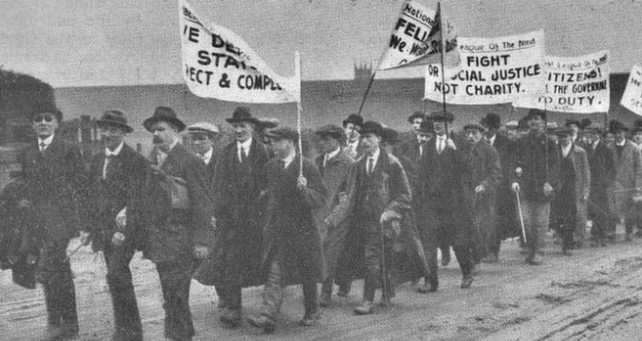
Demonstrators carry flags for justice

2020s

2020

The UK celebrates 100 years since the 1920 Blind March. Organized by the National League of the Blind, protesters marched across the UK opposing poor working conditions and poverty experienced by blind people.

2023

Department of Justice proposes updates to Title II of ADA to ensure digital platforms meet Web Content Accessibility Guidelines (WCAG). This enhances digital accessibility for persons with disabilities.
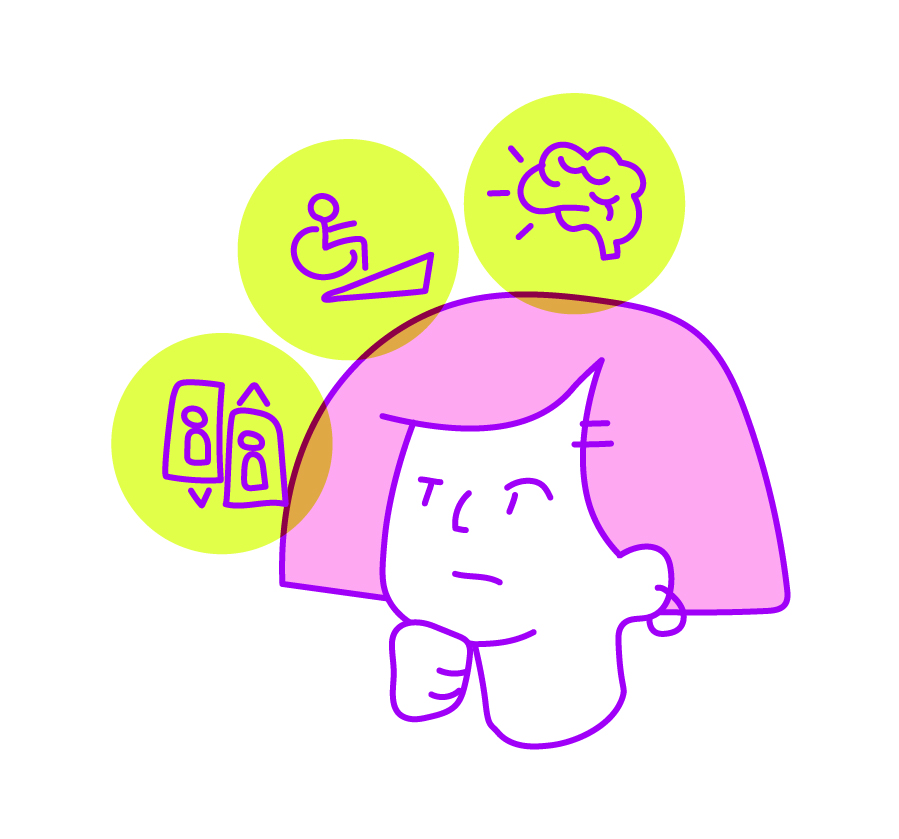
Illustration of designer thinking of design strategies

Now

As we celebrate progress made, it’s clear challenges still remain. So, what can you do?

What’s Next?

Continue the conversation.

Explore research, reflections, and design strategies authored by our team and collaborators, uncovering what it really means to design for Disability Inclusion.

Showing Slide 1 of 8

Iconography Key:

Legislation Enacted

Organization Formation

Guidelines Published

 Historical Event

Navigate the timeline using your mouse or keyboard arrows. Pagination buttons are located to the right for accessibility

Knowledge Repository

Start your journey with disability inclusive design at the level that works for you whether that’s:

Building your foundational knowledge at Level 100: Core

Exploring broader histories and systemic views at Level 200: Context

Getting tools you need for intervention at Level 300: Change

100: Core

Foundations of Accessibility in Design

Beyond the Basics.

Building a more inclusive future starts with a foundational understanding of accessibility. Before we envision what’s possible, let’s first identify a common ground.
Read more

Key words: ADA Standards, Scoping, Technical, Furniture

100: Core

Normative Design and Ableism

Every body deserves access.

Inclusion is vital for society. When we exclude a certain type of population, from a space, like people who use wheelchairs, we are essentially telling them that they do not matter.
Read more

Key words: Architecture, Intersectionality, Ableism, Strategies

200: Context

How Can Architecture Reduce Barriers?

Disablement is an action. Disablement is systemic.

Design and policy choices in the built environment can disable individuals by reinforcing barriers to access, mobility, independence, and participation.

Under Revision

Key words: Crip Technoscience, Circulation Disablement, Exclusionary Design

200: Context

Models of Disability

Thank you, next

The fight for disability equity means challenging models that reduce people to medical deficits. True inclusion sees disability as shaped by both individuals and their environments, centering dignity, agency, and belonging.
Read more

Key words: Social Model, Medical Model, Dynamic Disability

200: Context

Universal Design in Practice

Thoughtfully designed spaces benefit everyone.

Universal design is a framework for championing ALL users regardless of their body’s ability.
Read more

Key words: Universal Design Frameworks

200: Context

What is Disability Justice?

Designing beyond access.

Exploring Disability Justice as a design value that confronts ableism and centers marginalized voices.

Under Revision

Key words: Disability Justice, Ableism, Inclusive Design, Intersectionality